
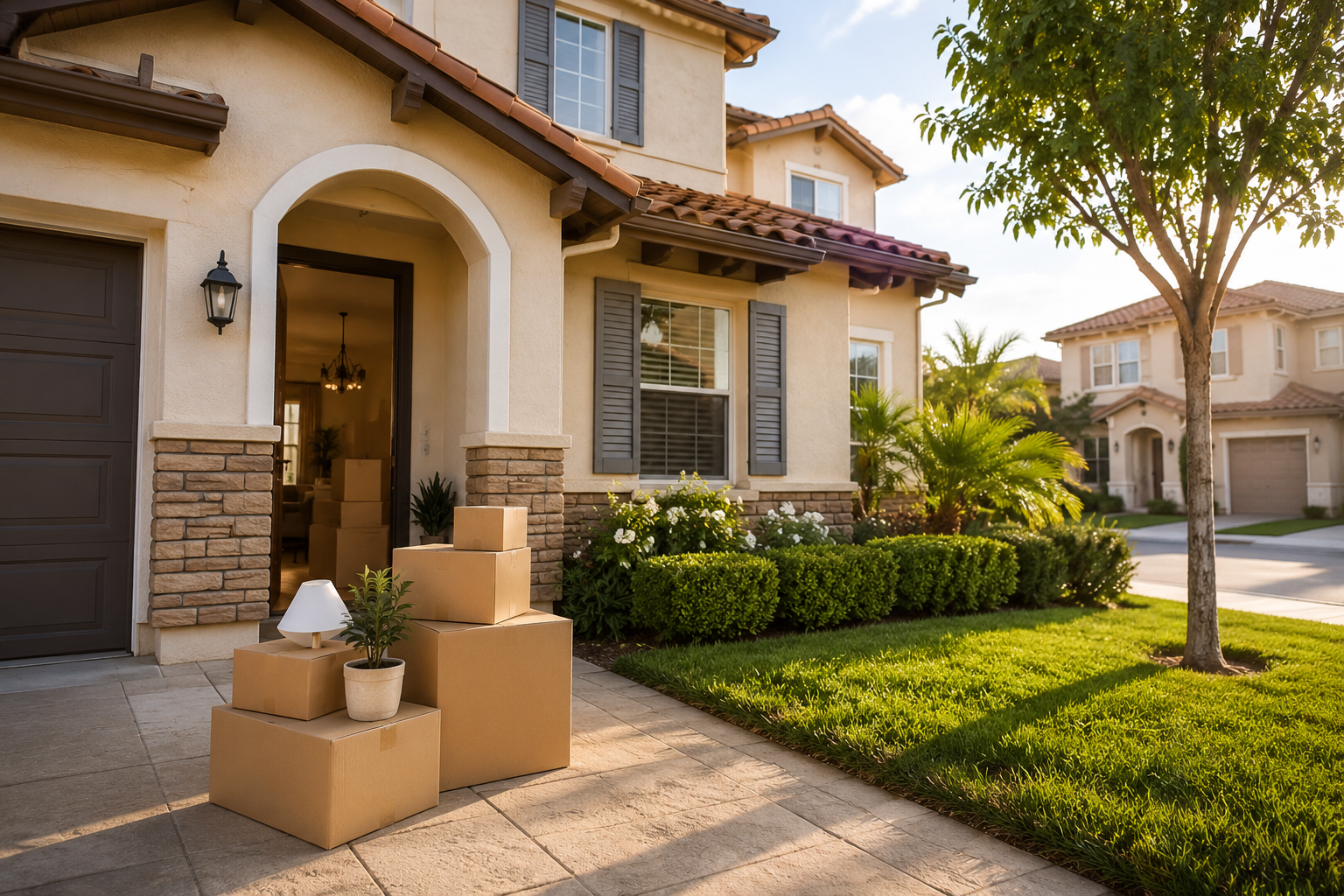
Yes, you can buy another house before selling your current home.
The bigger question is whether you can qualify for the new home while still owning your current one or access enough of your existing equity to make the next purchase work.
For homeowners with significant equity, buying first can make moving much easier. You can find the right home without rushing, move before putting your current house on the market, and avoid coordinating two closings on the same day.
But it can also mean temporarily carrying two homes or taking on additional financing.
If you’re thinking about selling your current home and buying another, here are the main options worth considering.
1. Qualify for the New Mortgage While Keeping Your Current Home
This is usually the cleanest way to buy before you sell.
If your income and finances allow you to qualify for the new mortgage while still carrying your existing mortgage, you may be able to purchase the next home without making the sale of your current property part of the transaction.
Your lender will look at things like your:
- Income
- Existing mortgage payment
- Other monthly debts
- Credit profile
- Available down payment
- Cash reserves
- Estimated payment on the new home
- Overall debt-to-income ratio
If you qualify to carry both properties, you have a lot more flexibility.
You can shop for the next home, close on it, move, and then put your existing property on the market.
This can also make your offer on the new home more attractive because you aren’t asking that seller to wait for your current house to sell.
The downside: You may have two mortgage payments
Qualifying for two homes doesn’t necessarily mean you’ll want to carry two homes for very long.
Before using this strategy, I’d want to know what happens if your existing house takes 30, 60, or even 90 days longer to sell than expected.
If that scenario would put you under significant financial pressure, another strategy may make more sense.
Use a HELOC to Access Your Current Home’s Equity
One of the most common problems for move-up buyers isn’t a lack of wealth. It’s that much of their wealth is tied up in their house.
For example, let’s say your current home is worth approximately $900,000 and you owe $350,000.
That’s roughly $550,000 in equity before considering selling costs and other expenses.
But equity isn’t the same thing as cash in your bank account.
If you need money for the down payment on your next home, a home equity line of credit (HELOC) may allow you to access a portion of your available equity before you sell.
You could potentially use those funds toward the next purchase and then pay off the HELOC when your existing home sells.
Talk to your lender before opening a HELOC
A HELOC creates additional debt and usually another monthly payment.
That can affect your ability to qualify for the new mortgage.
There can also be important timing considerations if you’re planning to list the property soon, so this is something I’d discuss with your lender before listing your current home or applying for additional financing.
3. Consider a Bridge Loan or Buy-Before-You-Sell Program
Another possibility is financing specifically designed to bridge the gap between your current home and your next one.
Depending on the lender and program, bridge financing may allow you to use some of the equity in your existing property toward purchasing your next home before the old one sells.
After your current property closes, proceeds from the sale can be used to pay off the bridge financing.
There are also companies and lenders offering variations of “buy before you sell” programs.
These programs aren’t all structured the same way. Fees, interest rates, qualification requirements, equity requirements, and restrictions can vary significantly.
That’s why I wouldn’t choose one simply because the idea sounds convenient.
You need to compare the cost of the program against the benefit of being able to buy first.
4. Make Your New Purchase Contingent on Selling Your Current Home
You can also make an offer on your next home that depends on the successful sale of your current property.
This is generally known as a home-sale contingency.
Essentially, you’re telling the seller:
“I want to buy your house, but I need my current house to sell to complete the purchase.”
This can reduce some of your financial risk because you’re not committing to own both properties indefinitely.
However, it introduces additional risk for the seller.
If another buyer can purchase the property without needing to sell a home first, that offer may be more attractive.
That doesn’t mean contingent offers don’t work.
The strength of the contingency matters.
There’s a big difference between:
Your current house isn’t even listed yet
and
Your current house is already under contract, inspections are complete, and the buyer is moving toward closing.
The further along your sale is, the more comfortable the seller of your next home may be with the contingency.
5. Sell First and Negotiate a Rent-Back
Sometimes the easiest way to “buy before you move” isn’t actually buying first.
Instead, you sell your current home and negotiate additional time to remain in the property after closing.
This is commonly called a seller rent-back or leaseback.
The sale closes, you receive your proceeds, and you temporarily remain in the home under an agreement with the new owner.
That can give you additional time to complete the purchase of your next property without having to move immediately when your sale closes.
Rent-backs require the buyer’s agreement and need to be properly structured. There may also be lender, insurance, occupancy, deposit, and timing requirements involved.
But when the circumstances line up, a rent-back can make coordinating a sale and purchase considerably easier.
6. Sell First and Use Temporary Housing
This isn’t usually anyone’s favorite option, but financially it can be one of the cleanest.
You sell your current home, receive the proceeds, and use temporary housing while searching for or closing on the next property.
The obvious disadvantage?
You may have to move twice.
But there are some important advantages.
You know exactly how much money you received from your sale. You aren’t carrying two mortgages. You don’t need to access equity through additional financing. And you may be able to write your next offer without a home-sale contingency.
For homeowners who don’t want the financial pressure of carrying two properties, a temporary move may be worth the inconvenience.
What If I Have a Lot of Equity but Not Much Cash?
This is where planning becomes especially important.
You could own a home with several hundred thousand dollars of equity and still not have enough liquid cash for the down payment on your next house.
So when I’m helping a homeowner think through a move, I don’t just want to know:
“How much is your house worth?”
I also want to know:
“Approximately how much would you walk away with if you sold it?”
Those are two very different numbers.
Your mortgage balance, estimated selling expenses, liens or other obligations, and the expected sale price all affect your potential net proceeds.
Once you have an estimated net number, you can start comparing your options.
Should I Buy First or Sell First?
There isn’t one strategy that’s best for everyone.
Buying first may make more sense if:
- You can comfortably qualify for both homes
- You have sufficient cash or accessible equity
- Finding the right replacement property is your biggest concern
- You want to move before preparing your current home for sale
- You can comfortably handle the possibility of temporarily owning two homes
Selling first may make more sense if:
- You need your sale proceeds for the next down payment
- Carrying two mortgage payments would create financial stress
- You want certainty about how much money you’ll have for the next purchase
- You want to avoid bridge financing or additional debt
- You want to make your next offer without a home-sale contingency
And sometimes the best strategy falls somewhere in between.
You might sell first but negotiate a rent-back. You might access some equity and buy first. Or you might list your current home, get it under contract, and then begin aggressively shopping for the replacement property.
Start With the Numbers Before Putting Your Home on the Market
If you’re considering selling your home and buying another one in Orange County, you don’t necessarily need to list your house before figuring all of this out.
In fact, I’d rather work backward first.
Start by estimating what your current home could realistically sell for in today’s market.
Then estimate what you may actually walk away with after paying off the mortgage and accounting for the costs associated with selling.
From there, talk with a lender about what you could qualify for before the sale versus after the sale.
Now you have something useful to compare.
You may discover that buying first is completely realistic.
You may find that you can buy first, but the cost and risk of carrying two homes isn’t worth it.
Or you may realize that selling first gives you significantly more buying power and puts you in a stronger position when you find the next house.
There isn’t a universal right answer.
The goal is to structure the sale and purchase around your finances and your move, rather than putting your house on the market first and figuring out the next step afterward.
If you’re considering selling your Orange County home and buying another property, I can help you estimate your home’s value and potential net proceeds and map out the real estate side of the move before you decide which route makes the most sense.