
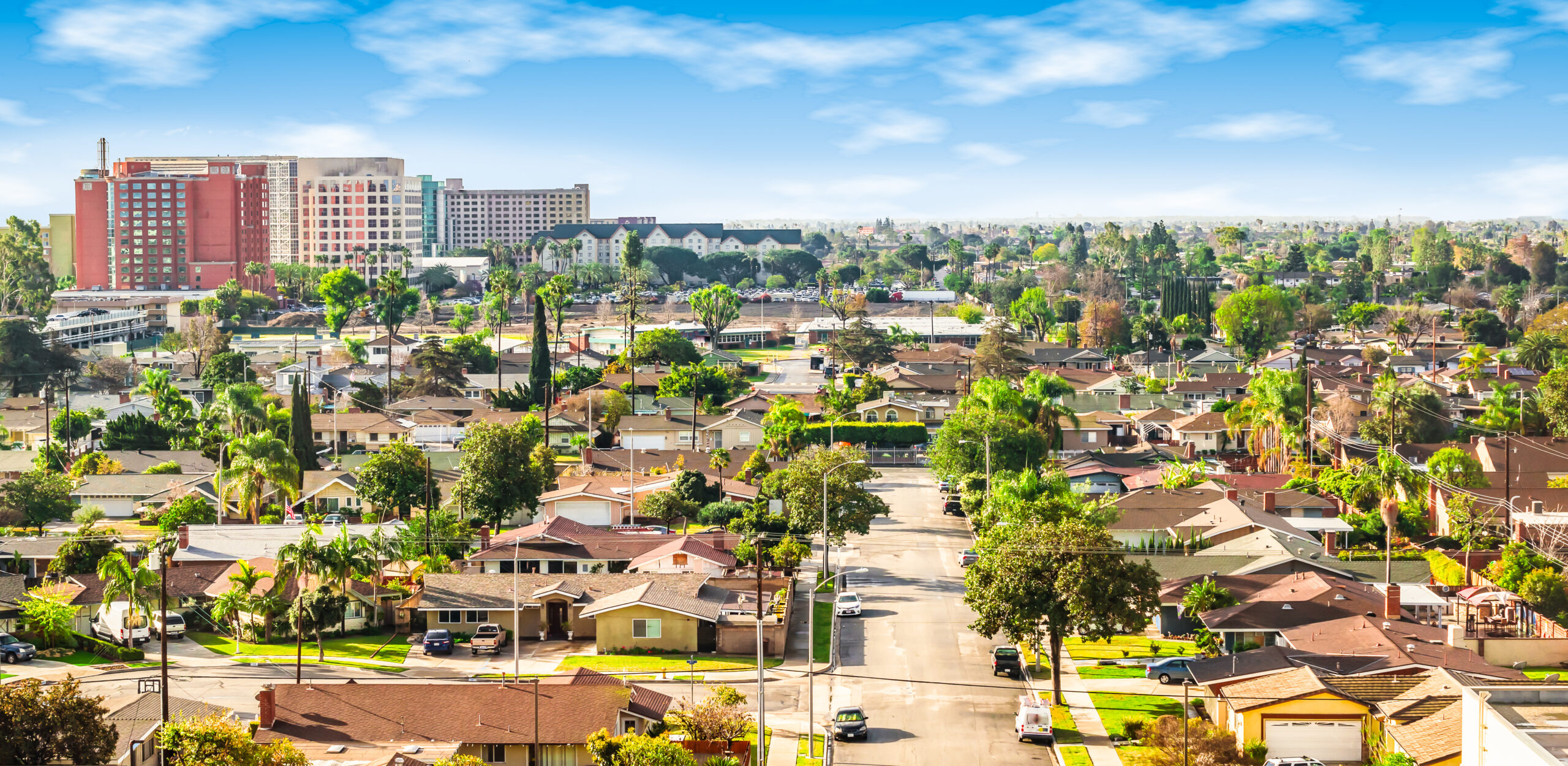
If you’re thinking about buying a home in Anaheim in 2026, the housing market is giving buyers a mixed message.
There are more homes available than there were during the tightest inventory years; homes are generally taking a little longer to sell, and buyers have more opportunities to compare properties before making a decision.
At the same time, Anaheim home prices have remained relatively strong, and mortgage rates are still one of the biggest affordability challenges facing buyers.
So, is 2026 actually a good time to buy a home in Anaheim?
For some buyers, yes.
But I wouldn’t make that decision based on whether someone on social media says the housing market is “good,” “bad,” or about to crash.
I would look at four things:
- What homes are actually selling for in the part of Anaheim you want to live in
- How much inventory and competition exists
- What your monthly payment looks like at today’s mortgage rates
- How long you realistically expect to own the home
The market data gives us context.
Your budget, timing, and the individual property are what determine whether buying makes sense.
Anaheim Housing Market Snapshot for 2026
Here’s where the Anaheim housing market currently stands.
| Market Metric | Current Reading | What It Means |
|---|---|---|
| Median Listing Price | $939,000 | Asking prices remain elevated |
| Median Sale Price | $948,427* | Closed prices remain relatively firm |
| Active Listings | 524 | Buyers have more properties to compare |
| Median Days on Market | About 34–40 days | The market is moving, but not every home sells immediately |
| Recent Price Trend | Modestly higher YoY | Current data does not show a broad Anaheim price collapse |
Realtor.com currently reports a median Anaheim listing price of approximately $939,000, with 524 active listings and a median of about 40 days on market.
Redfin’s latest available Anaheim data, covering the three months ending May 2026, shows a median sale price of $948,427, up 1.1% from the same period one year earlier. Homes sold in an average of 34 days compared with 32 days the previous year.
Those numbers point to a market that is still active but gives buyers somewhat more time and selection than the fastest markets of recent years.
That distinction matters.
More inventory does not automatically mean falling prices.
And slower sales do not automatically mean buyers can negotiate heavily on every home.
Are Anaheim Home Prices Going Down in 2026?
Based on the current data, Anaheim is not showing a broad decline in home prices.
Redfin’s latest data showed Anaheim prices up approximately 1.1% year over year, with a median sale price around $948,427.
Realtor.com’s current median listing price is approximately $939,000.
Different housing websites will rarely report the same number because they use different data sources, reporting periods, and methodologies.
That’s why I care more about the direction of the data than whether one website says the median is $939,000 and another says $948,000.
Both are telling a similar story.
Anaheim home prices have remained relatively resilient.
If you plan to wait because you expect a large housing-market correction to make Anaheim dramatically cheaper, the current numbers aren’t showing that yet.
Could prices change later?
Absolutely.
Housing markets change.
But I would not build a home-buying strategy around assuming a major price decline will definitely happen.
Anaheim Buyers Have More Homes to Choose From
One of the more encouraging developments for buyers is inventory.
Realtor.com currently shows approximately 524 active homes for sale in Anaheim.
That gives buyers more opportunities to compare properties, neighborhoods, conditions, and pricing instead of feeling like they have to jump on the first decent home that appears.
More inventory can also create a bigger difference between a home that has just been listed and one that has been sitting on the market.
For example:
A well-priced home that hits the market in desirable condition may still attract several interested buyers quickly.
A home that has been sitting for 45, 60, or 75 days can become a very different conversation.
That is where we start looking closely at:
- Price reductions
- Recent comparable sales
- Property condition
- Seller motivation
- Credits or repairs
- Length of time on market
That information tells us much more than simply asking whether Anaheim is a “buyer’s market” or “seller’s market.”
How Competitive Is the Anaheim Housing Market?
Anaheim is still competitive, but competition varies significantly from one home to another.
Redfin reports that Anaheim homes are taking an average of approximately 34 days to sell, compared with 32 days a year earlier.
That doesn’t sound like a dramatic change.
But even a few extra days combined with more inventory can give buyers additional breathing room.
When I look at a specific property, I don’t automatically assume we need to write an aggressive offer just because the home is in Anaheim.
I look at:
- How long it has been listed
- Whether the seller has already reduced the price
- Recent comparable sales
- The condition of competing listings
- Whether similar homes are going pending quickly
- What we can reasonably learn about the seller’s priorities
Then we determine what a strong offer actually looks like.
Sometimes the property requires a fast and competitive approach.
Sometimes there is room to negotiate.
And sometimes the right decision is simply to walk away.
I also don’t believe buyers should automatically give up meaningful protections just because a home may be competitive.
Offer strategy should balance competitiveness with the buyer’s financial situation and comfort with risk.
What Does It Cost to Buy in Different Parts of Anaheim?
One of the biggest problems with using a single “Anaheim median home price” is that Anaheim is not one uniform housing market.
Anaheim covers a large geographic area, and housing varies significantly depending on location, property type, age, size, HOA structure, and neighborhood.
The difference becomes especially obvious when comparing Anaheim with Anaheim Hills.
Redfin’s latest Anaheim Hills market data showed a median sale price of approximately $1,146,614 for the three months ending May 2026.
That is substantially higher than Anaheim overall.
| Area | Approx. Median Price | Buyer Takeaway |
|---|---|---|
| Anaheim Overall | About $939K–$948K | Broad citywide benchmark |
| Anaheim Hills | About $1.15 million | Generally a higher-priced Anaheim submarket |
| ZIP Code 92806 | About $1.1 million listing median | Shows how pricing can vary by ZIP code within Anaheim |
Median prices are market-level indicators and are not estimates of an individual property’s value. Home type, size, lot, condition, HOA, upgrades, and exact location can materially affect pricing.
This is why I wouldn’t tell a buyer simply, “The median Anaheim home costs around $950,000.”
That number is useful for understanding the overall market, but it doesn’t tell us what a particular buyer will actually encounter.
Someone searching for an attached home or condo may see a very different price range than someone searching for a detached single-family home.
Someone looking in Anaheim Hills may face a completely different price environment than someone looking elsewhere in Anaheim.
The better question is:
What does your budget buy in the specific parts of Anaheim that fit your needs?
Mortgage Rates Are Still One of the Biggest Affordability Challenges
For many Anaheim buyers, the biggest challenge in 2026 isn’t necessarily that home prices are rapidly increasing.
It’s the monthly payment created by today’s mortgage rates.
Mortgage News Daily’s daily 30-year fixed mortgage index has remained in the upper-6% range.
Because Mortgage News Daily updates its rate index daily, I like using it to understand the short-term direction of mortgage rates rather than relying only on a weekly average.
| Rate Indicator | Approx. Level | What Buyers Should Know |
|---|---|---|
| Recent 30-Year Fixed | Upper-6% range | Affordability remains constrained |
| Recent Direction | Rates continue to fluctuate | Small changes can noticeably affect monthly payments |
| Buyer Strategy | Plan around today’s payment | Don’t rely on a future refinance to make the home affordable |
This is important because a small change in interest rate can noticeably affect a monthly payment when you’re financing hundreds of thousands of dollars.
That’s why I recommend starting with the payment you are comfortable making.
Then we work backward into a purchase price.
I would much rather have a buyer purchase slightly below their maximum approval amount and still feel comfortable with their monthly expenses than become house-poor because the lender technically approved them for more.
Should You Wait for Mortgage Rates to Come Down?
This is one of the biggest questions buyers are asking in 2026.
And unfortunately, nobody can tell you exactly where mortgage rates will be six months from now.
If rates come down significantly, buying power could improve.
But lower mortgage rates can also bring more buyers back into the market.
That matters because housing affordability has two sides:
The cost of financing the home and the amount of competition for the home.
If rates decline but buyer demand rises dramatically, some of the benefit from lower rates could be offset by higher home prices or stronger competition.
That does not mean you should rush out and buy because rates might fall.
It means I wouldn’t try to perfectly time the market.
If you find a home you like, the payment comfortably works at today’s rate, you have adequate reserves after closing, and you expect to own the home for several years, buying now may make sense.
If the only way the property becomes affordable is by assuming mortgage rates will drop substantially later, I would rather adjust the price range or wait.
A refinance can be a future opportunity.
It should not be required to make the home affordable from day one.
What Is Happening in the California Housing Market?
Anaheim doesn’t operate in isolation.
The broader California housing market gives us useful context for what buyers are experiencing locally.
The California Association of REALTORS® reported that the statewide median home price was $904,640 in June 2026.
That was down 2.8% from May’s record $930,260 median, but still 0.4% higher than June 2025.
Year-to-date California home sales were up 1.9%.
California’s housing market continues to show relatively resilient prices while sales activity has improved modestly.
The statewide numbers tell a similar story to what we are seeing in Anaheim.
Prices have been relatively resilient.
Sales activity has improved somewhat.
But affordability remains difficult because financing costs are still high.
That creates a market where buyers are active but also more selective and payment-conscious.
What Is the Housing Market Forecast for the Rest of 2026?
Housing forecasts are useful for understanding possible direction.
They are not guarantees.
The California Association of REALTORS® entered 2026 expecting California existing single-family home sales to increase modestly while home prices also posted moderate gains.
So far, actual 2026 data has shown some improvement in sales activity while statewide prices have remained relatively stable.
Mortgage rates remain the biggest wildcard.
If mortgage rates move meaningfully lower, affordability could improve, and more buyers may enter the market.
If rates remain elevated, affordability will likely continue limiting how aggressively some buyers can compete.
That is why I would be careful about headlines claiming either:
“Home prices are about to crash.”
or
“You need to buy immediately before prices explode.”
Neither is a useful home-buying strategy.
The better approach is to monitor what is happening with:
- Local inventory
- Home prices
- Mortgage rates
- Buyer competition
- Your own monthly budget
Then make a decision based on what is actually happening rather than what someone predicts might happen.
So, Should You Buy a Home in Anaheim in 2026?
Here’s how I currently look at the Anaheim market.
Buyers have more inventory and a little more time to evaluate some homes.
At the same time, prices have remained relatively resilient, and desirable properties can still attract competition.
The biggest obstacle continues to be affordability created by mortgage rates.
That means there isn’t one answer that applies to every buyer.
Buying may make sense if:
- You can comfortably afford the payment at today’s mortgage rate.
- You still have adequate savings after closing.
- You expect to own the property for several years.
- You find a home that fits your needs and budget.
- The purchase makes financial sense without assuming a future refinance.
- You’re buying because the home works for your life, not because you’re afraid of missing out.
Waiting may make sense if:
- The monthly payment would make your budget uncomfortable.
- You need mortgage rates to fall substantially before the payment works.
- You do not have sufficient savings after closing.
- Your job, location, or household situation may change soon.
- You would need to compromise heavily just to buy something.
- You would need to compromise heavily just to buy something.
There is nothing wrong with waiting when the numbers don’t work.
But I also wouldn’t wait solely because someone says a huge Anaheim housing crash is around the corner.
Current market data does not show that.
How I Help Anaheim Buyers Make the Decision
When I work with a buyer, my goal isn’t to convince them that every market is a great time to buy.
The goal is to determine whether buying makes sense for them.
We start with the monthly payment.
Not just the purchase price.
We look at what the estimated mortgage payment could be after principal, interest, property taxes, homeowners insurance, HOA dues if applicable, and other expected housing costs.
Then we narrow the search to the homes and parts of Anaheim that realistically fit that budget.
When we find a property the buyer likes, I look at:
- Recent comparable sales
- Current competing listings
- How long the property has been on the market
- Previous price reductions
- Property condition
- Potential repairs
- Market activity around similar homes
- What we can reasonably determine about the seller’s priorities
Then we decide how to approach the offer.
Sometimes the right strategy is to move quickly.
Sometimes the right strategy is to negotiate.
Sometimes the right strategy is to wait.
And sometimes the smartest thing a buyer can do is walk away.
Market data gives us context.
The individual home and your financial situation determine the decision.
Thinking About Buying a Home in Anaheim?
If you’re considering buying a home in Anaheim, I can help you look beyond the citywide averages.
We can narrow the search to the parts of Anaheim that actually fit your budget, housing preferences, commute, and monthly payment.
Then we can look at current listings, recent comparable sales, estimated payments, and the competition around the specific homes you’re considering.
That will tell you much more than a headline saying it is either a “good” or “bad” time to buy.